


Women's Economic Empowerment Is Not One Thing; It Is Everything at Once

Amina runs a small restaurant in Kilifi.

Her main customers are the men who work at a nearby quarry; they come in tired, dusty, hungry. She knows what they want before they sit down. She has been feeding this community for years, out of a small kitchen she built with her own hands and her own savings.
A year ago, that kitchen was everything she had.
Today, Amina has expanded. A mud structure now stands alongside the original kitchen, a proper sitting space where her customers eat with dignity instead of standing by the roadside.

She built it because Fanikisha; Kianda Foundation's Business Women Support Program in Kilifi, changed how she runs her business.
How she prices her meals.
How she separates her business income from her household money.
How she sees, clearly and on paper, what her restaurant is actually earning, and what it could earn if she ran it the way it deserves to be run.
The sitting space is not the story.
The sitting space is what happens when a woman finally sees what she has already built.
When a Daughter Changes Too
Amina's daughter, Mwanaisha, goes to Shariani Primary School in Kilifi.
Last year, Mwanaisha went through Smartika Mimi: Kianda Foundation's school-based hygiene and nutrition program for rural public primary schools in Kenya.
Smartika Mimi means "I am Smart" in Kiswahili. In 2025, the program reached

230 Grade 7 learners at Shariani Primary School alone.
What Mwanaisha learned was not complicated.
How to keep herself clean. How to keep her school clean. How to keep her home clean. The habits that. when they take root in a child, determine whether she gets sick, whether she misses school, whether she is present and ready to learn on the days that matter.
She came home and applied what she learned.
Not just to herself, to the house, to the family, to the space where her mother comes home after a long day at the restaurant and does not have one more thing to worry about.
Why Women's Empowerment Programs in Kenya Cannot Work in Isolation
Amina and Mwanaisha did not arrive at Kianda Foundation through the same door.
Amina found Fanikisha. Mwanaisha found Smartika Mimi. Two different programs in Kenya, two different entry points, two different sets of skills.
One family. One roof. One ripple moving through both of their lives at the same time.
This is what the development sector misses when it measures women's economic empowerment as a single intervention.
A skills program here. A health initiative there. A savings group somewhere else. Each one measured in its own column. And then quiet frustration when the numbers do not move the way they should, when a woman graduates from a business training programme and still cannot sustain the growth, still finds herself back where she started eighteen months later.
The reason is rarely the program.
The reason is everything the program did not touch.
The Connection Between Health, Education, and Economic Empowerment
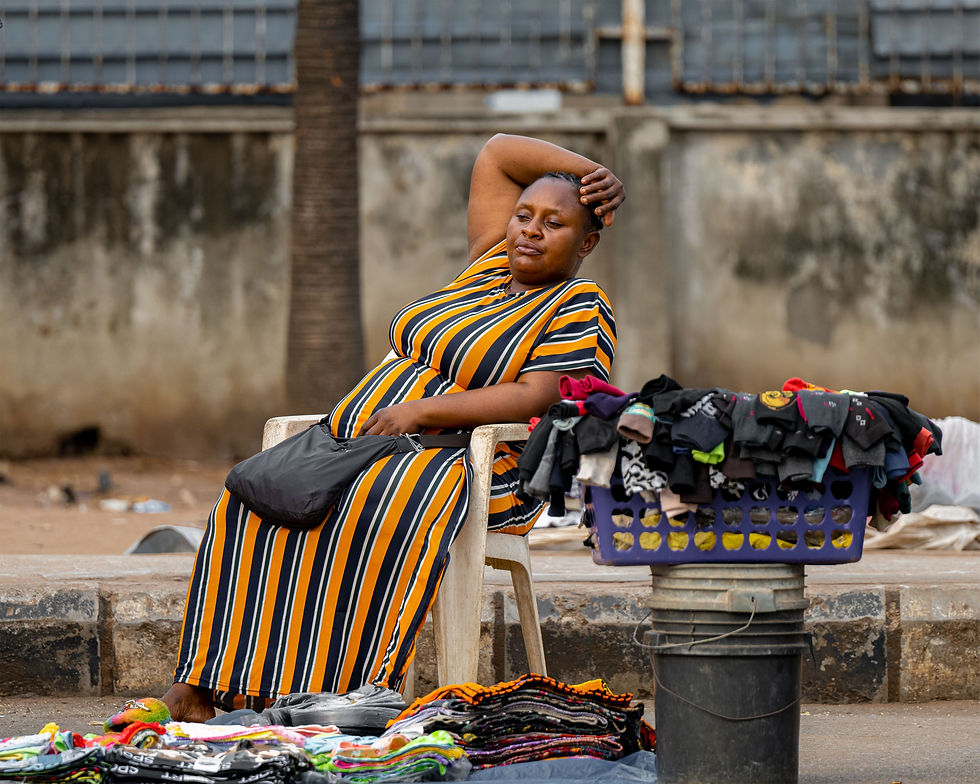
A woman cannot build a sustainable business while her child is sick every other week from preventable illness.
She cannot focus on her cash flow when she is spending every spare hour in a clinic waiting room.
She cannot grow her restaurant when the stress she carries home has nowhere to go, when no one has asked how she is, when the weight she arrived with is still the weight she carries.
This is why Kianda Foundation has never been a single-intervention organization.
Because 65 years of sitting with women in Kenya taught us that their lives are not single interventions. They are ecosystems. Complex, interconnected, where a change in one place; a mother who now pays herself a salary, a daughter who now washes her hands before eating, moves through the whole system.
What Integrated Women's Empowerment Looks Like Across Kianda Foundation's Programs
Fanikisha equips women with business skills, financial literacy, and integrated counselling to build livelihoods that last.
Smartika Mimi equips children in rural public primary schools with hygiene and nutrition habits that keep them healthy, present, and ready to learn, directly benefiting the households of the women in Fanikisha.
CHEP — Children's Health Program provides free healthcare for children whose families cannot afford it. Because a healthy child is a child whose mother can focus on building her business.
Kimlea Girls Technical Training Centre gives girls from Kenya's tea estates a technical qualification that breaks a generational pattern of plantation labour.
These are not separate programs running in parallel.
They are one argument, made across many entry points.
Women's economic empowerment in Kenya does not happen in a classroom alone. It happens when the classroom connects to the clinic, the clinic connects to the home, the home connects to the school, and the school connects back to the next generation of women who will one day walk into a Fanikisha session of their own.
The Ripple That Does Not Stop
Amina's sitting space is full most days now.
The quarry workers come in, sit down, eat well. She knows their names. She knows their orders. She knows exactly what each meal costs to make and exactly what she needs to charge to grow.
Down the road, Mwanaisha goes to school.
She washes her hands. She eats well. She shows up.
These two facts are not unrelated.
They are the same story, told from two different angles.
And they are why, when someone asks what Kianda Foundation does, the honest answer is not one thing.
It is everything a woman and her family need, at the moment they need it, to build a life that holds.

Kianda Foundation has been dignifying the lives of women and girls in Kenya since 1961 through education, economic empowerment, and healthcare.
To support this work: donate today
Names have been changed to protect privacy. The details of their stories are real.

Comments